Table of contents
Share
When you need recovery counsel vs. when a broker can file
For professional firms operating in the post-SCOTUS refund landscape, one of the most consequential triage decisions is identifying, early, whether a given importer's situation belongs on the counsel side of the line or the broker side. The two pathways serve different claim profiles, carry different economics, and produce different outcomes when misapplied.
Getting the triage right protects the importer's recovery, preserves professional time for the work that fits each discipline, and keeps the overall recovery economy functioning. Getting it wrong — pushing a litigation-grade case through CAPE, or sending a clean Phase 1 filing to a trial attorney — wastes time and recoverable dollars in equal measure.
This article frames the triage from the perspective of the firms doing the work.
The structural distinction
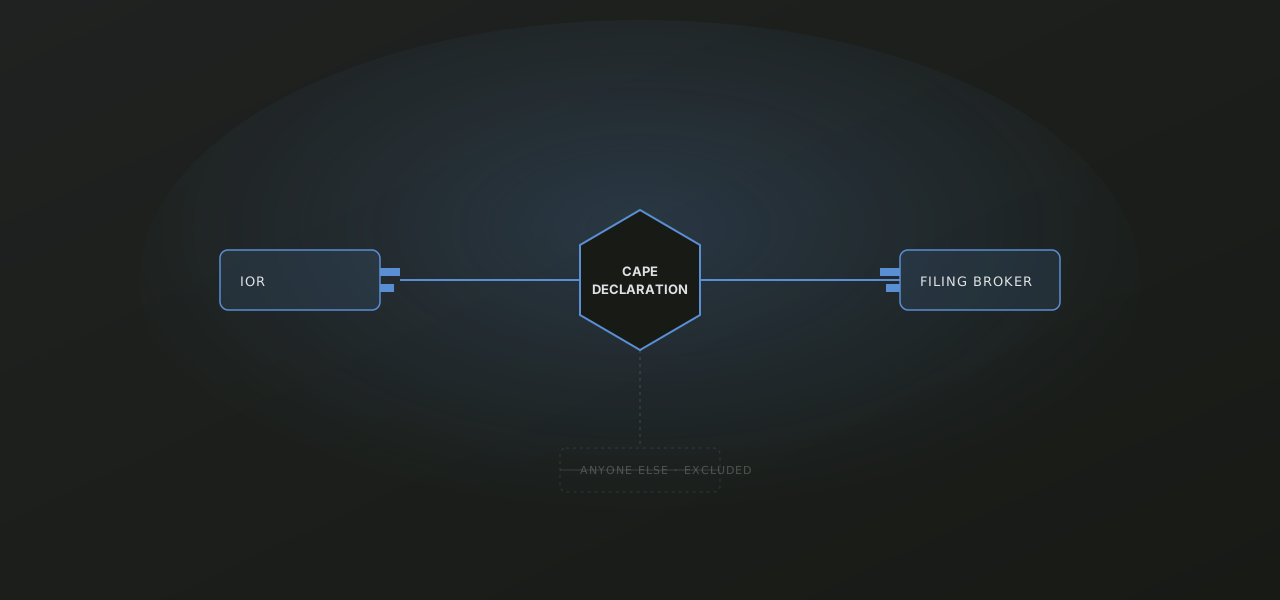
A customs broker, particularly one with refund experience, is built to handle administrative process at volume. The broker's value is fluency with CBP's filing systems, familiarity with classification and entry data, and the ability to prepare and submit cleanly structured claims at scale.
A recovery attorney, particularly one with trade or customs litigation experience, is built to handle adjudicative work. Counsel's value is legal analysis, advocacy in contested matters, the ability to argue classification or jurisdictional questions, and standing to litigate at the Court of International Trade when the administrative pathway is exhausted or inappropriate.
The two roles complement each other. They do not substitute for each other.
Where the broker pathway fits
Broker filings are the right pathway when the claim profile satisfies four conditions:
The legal entitlement to the refund is uncontested. CBP is not disputing whether the duties should be refunded, only processing the administrative work to issue the refund.
The classification is clean. The HTSUS code applied at entry is the correct code, no reclassification is needed, and no party has reason to challenge the classification basis.
The math is straightforward. Single-country exposure or clean multi-country attribution with unambiguous per-period rates. No layered tariff complications requiring legal analysis.
The administrative pathway is available. The claim fits within an active CAPE phase, with documentation that supports streamlined processing.
When all four conditions hold, broker-filed CAPE work is the most efficient pathway for the importer. The professional services cost is low relative to the recovery amount, the timeline is short, and the broker's existing infrastructure absorbs the work efficiently.
A meaningful portion of the post-SCOTUS refund universe fits this profile. These are the claims that should be in broker queues, not attorney queues.
Where the counsel pathway fits
Counsel-grade work is the right pathway when any one of several complicating factors is present:
Classification dispute. The HTSUS code applied at entry is contested, or a reclassification would materially change the recoverable amount, or CBP has indicated a different classification position than the importer's filing.
Multi-tariff layering. IEEPA duties sit alongside Section 232 or Section 301 duties, and the question of which portions are refundable requires legal analysis of overlapping authorities.
Contested liquidation. The liquidation itself is in dispute — extension challenges, suspension questions, or jurisdictional issues that require formal protest framing rather than streamlined administrative filing.
Litigation likely or already filed. The claim has been pushed to the Court of International Trade, or the importer is a named party in active CIT proceedings, or the legal questions involved require formal adjudication.
Material recovery at stake with documentation complexity. Larger recoveries, even when administratively eligible, often benefit from counsel oversight to ensure documentation quality matches the dollar amount involved.
When any of these factors is present, the broker pathway either cannot reach the recovery or risks compromising it. Counsel involvement is the structurally correct path.
The hybrid reality
In practice, most importers with meaningful IEEPA exposure have claims that span both pathways. The largest portion of their entries may fit clean CAPE filings, while a smaller but materially valuable portion requires counsel-grade work.
A well-run recovery effort for such an importer involves both a broker filing the administratively eligible claims and counsel handling the contested or litigation-grade portion — with deliberate coordination so the two efforts don't conflict or duplicate. The broker's filings should not waive arguments the attorney needs to preserve. The attorney's litigation strategy should not assume CAPE claims that haven't been filed.
This kind of coordination is friction in the current market. Importers don't usually have existing relationships with both a customs broker and a recovery attorney, and even when they do, the two firms may not have working coordination with each other.
What this means for professional firms
For brokers, the strategic question is which subset of your existing import client base has refund profiles that fit your filing capabilities, and which require referral to counsel for portions of the claim. For counsel, the strategic question is the inverse — which prospects need full legal representation, and which have CAPE-eligible portions where a broker should be doing the filing work.
Firms that operate in coordination with their counterparts capture more of the recovery, deliver better outcomes to importers, and build referral relationships that compound across the recovery cycle.
What Corvant does
Corvant qualifies each importer's situation across counsel-grade and broker-grade portions, then introduces the right partner for each part of the claim. When coordination across multiple professional firms is required, the exchange surfaces that explicitly — and connects the firms with each other where helpful.
If your firm wants to participate in the exchange, request access.