Table of contents
Share
CAPE Phase 1 vs Phase 2 — what each covers
When U.S. Customs and Border Protection began processing refund claims for invalidated IEEPA tariffs at scale, they did not roll out a single, all-purpose refund process. They rolled out the Consolidated Administrative Process for Entries — CAPE — in phases.
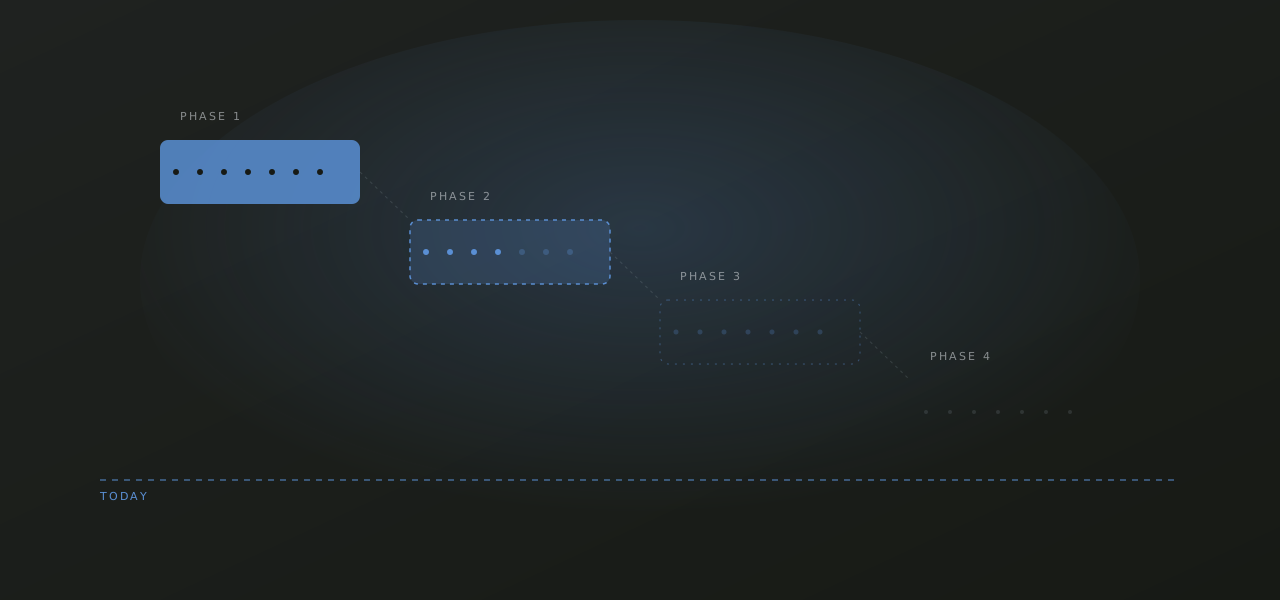
The phased rollout was deliberate. The simpler claim profiles were processed first, in Phase 1. More complex profiles were brought into the eligible universe in Phase 2. The distinction matters because the two phases have different scopes, different documentation requirements, and different downstream implications for whether a claim can be filed administratively or needs to escalate to formal legal action.
This article explains what each phase covers, who fits where, and why the difference is more than a procedural footnote.
What CAPE is, briefly
CAPE is CBP's administrative pathway for refunding tariffs that have been invalidated, withdrawn, or otherwise determined to have been improperly collected. It exists to handle volume — the post-SCOTUS refund population is in the hundreds of thousands of importers and likely tens of millions of individual entries. Processing each one through full litigation would overwhelm the Court of International Trade and take a decade. CAPE is the administrative shortcut.
Importers, brokers, and recovery counsel file claims into the CAPE process. CBP reviews. If the claim is clean and fits the eligible profile for the active phase, refunds are issued — typically within a defined processing window, with interest accrued per statute.
CAPE Phase 1 — the simple profile
Phase 1 was the initial CAPE rollout. It covered the cleanest, most administratively straightforward refund claims:
Single-country exposure, where all affected entries originated from one country and were subject to a single IEEPA tariff rate during the entry period. The math is direct — entered value times the invalidated rate equals the refund amount.
Unambiguous HTSUS classification, where the harmonized tariff code applied at entry is uncontested. No reclassification disputes, no Section 232 or 301 overlay complications.
Clean liquidation records, where CBP's entry records align with the importer's documentation and no discrepancies require adjudication.
Standard recovery amounts, without unusual circumstances that warrant individual review.
For an importer who fits Phase 1, the claim filing process is genuinely fast. A capable customs broker or accountant familiar with CAPE forms can prepare and submit claims efficiently. The processing timeline is measured in weeks to a few months. The professional services cost is modest relative to the refund amount.
Phase 1 was designed to clear the easy cases first and prove the process works at scale before opening the more complex universe.
CAPE Phase 2 — the expanded scope
Phase 2 brought a wider set of refund profiles into the administrative process. It covered the situations that Phase 1 left aside:
Multi-country exposure, where an importer's entries span multiple affected countries with different IEEPA rates at different times. The math is more involved; the claim has to be structured to reflect the per-country, per-period attribution accurately.
Layered tariff situations, where IEEPA duties sit alongside Section 232, Section 301, or other tariff layers, and the question of which portion is refundable requires careful analysis.
Entries with classification ambiguity, where the HTSUS code applied at entry is defensible but a reclassification could change the refundable amount — or where the original classification itself is in dispute.
Larger or unusual-profile claims that benefit from individual CBP review rather than streamlined batch processing.
Phase 2 claims still flow through the administrative process, but they require more thorough documentation, more careful preparation, and often more experienced recovery professionals to file. The processing timeline runs longer than Phase 1 — typically months rather than weeks — and the cost of professional services scales with the complexity of the work.
Where Phase 2 ends and litigation begins
Not every refund situation fits CAPE, even in Phase 2. Some claims involve contested legal interpretations, novel classification questions, or government opposition that requires formal proceedings. These cases head to the Court of International Trade.
The line between Phase 2 CAPE and CIT litigation is not always obvious from the outside. An experienced recovery attorney can usually identify, within a first review, which side of the line a given importer's situation falls on. The pathway difference is material — administrative recovery is faster and cheaper, but only if it actually works for the claim profile. Forcing a litigation-grade case through CAPE wastes time. Sending a Phase 1 claim to a trial attorney wastes money.
The hybrid reality
Most importers have entries that span both phases. The earliest, simplest entries often fit Phase 1. Later or more complex entries may require Phase 2 or full litigation. A practical recovery strategy usually sequences the work: file the Phase 1 claims first to recover the clean dollars quickly, then build the more complex filings in parallel.
This is why working with a coordinated mix of professionals — a broker or accountant for the Phase 1 volume, a recovery attorney for the Phase 2 and litigation-grade portions — usually produces better outcomes than picking one channel and forcing every claim through it.
What Corvant does
Corvant qualifies each importer's situation across phase eligibility, complexity, and recovery pathway. When your refund profile spans phases, we connect you with the partners who fit each part of the claim — and coordinate the handoff so nothing falls through the gaps.
If you're an importer, try the demo or view pricing to understand which phases apply to your entries. If you're a professional firm working in refund recovery, request access to participate in the exchange.